
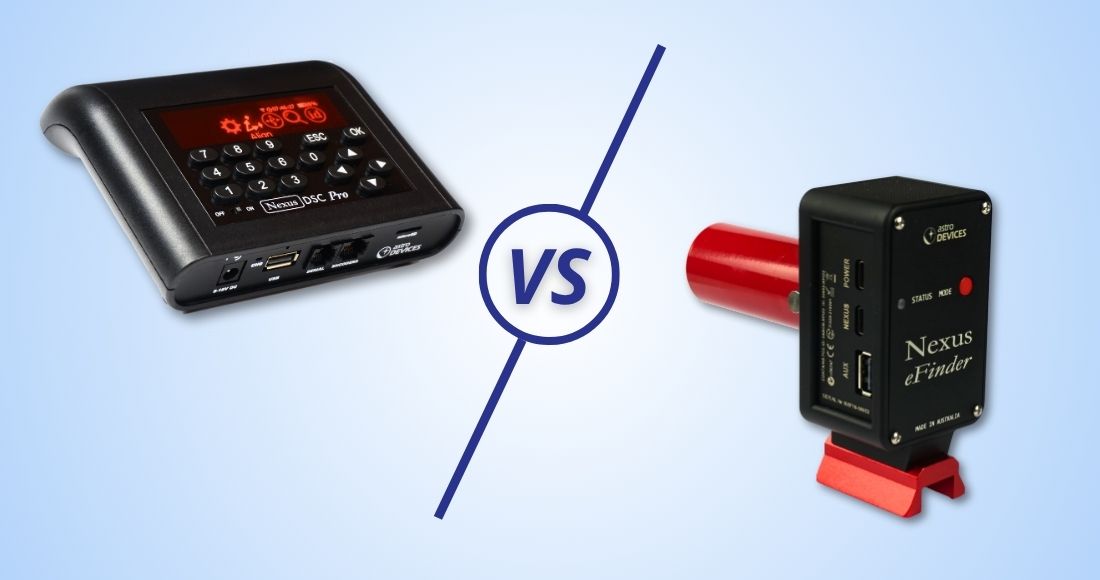
Plate solving vs DSCs at a glance:
- Plate solving and digital setting circles (DSCs) each serve their own purpose, and which one works best will highly depend on your preferences and observing habits
- Plate solvers are more beginner-friendly, useful for less precise telescope mounts (like DIY dobs), and can often be more affordable
- Digital setting circles are better suited for observers that need more accessible features, enjoy using advanced modes like Tour and having a large celestial catalogue to browse, and want an entirely self-contained unit that can withstand extreme weather
Read on for the full comprehensive guide:
So you’ve got some cash to splash on a new toy for your scope – but you’re not actually sure what to get. Especially when it comes to plate solvers and digital setting circles (DSCs). Which one do you choose? What works better?
With the launch of several new plate solving devices, astronomers are beginning to compare each one. Unfortunately there aren’t many comprehensive guides available, so it can be confusing for some to understand which device is better.
We sat down with our founder Serge, arguably one of the most knowledgeable people in the amateur astronomy industry, to get an in-depth look at the pros and cons of plate solving and digital setting circles.

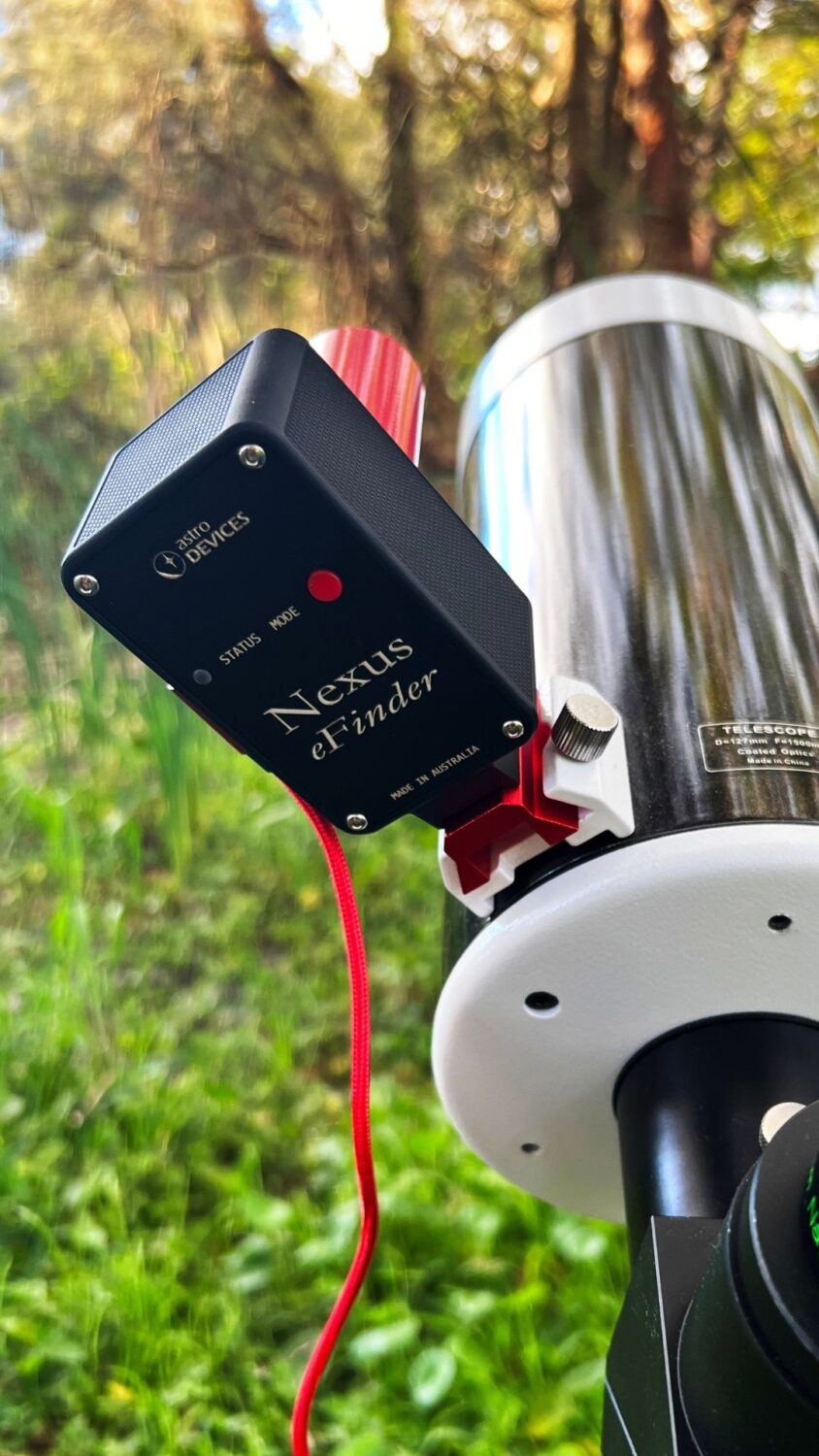
Firstly – what is plate solving and what are DSCs?
Both essentially help you with observing by locating what you’re looking at and showing you which way to point to find the object you want to see. It’s the methodology of the devices that differs – as well as some of the features you can get on each one.
How plate solving works
Plate solving devices have an in-built camera that will take a photo of the sky and compare it against a database of stars to instantly identify exactly what you’re looking at.
How DSCs work
DSCs use encoders attached to your telescope, plus a 1/2/3 star alignment, to identify where you are and where to point your telescope. You can read more about how digital setting circles work here.
So if these devices both do the same thing, why does it matter which one you get? It all comes down to how you observe, as well as what sort of telescope/mount you have.
The advantages and disadvantages of plate solving
When discussing the pros & cons of plate solving below, we’re focusing on the standalone units you can purchase, rather than open-source software.
Plate solving pros:
- Eliminates the star alignment process – this is great for beginners that don’t want to fiddle around trying to align their device. The plate solver easily takes care of it thanks to taking a photo of the sky and pinpointing it from its database instead
- Easier set-up with no encoders – another great point for beginners or those that don’t want to spend the time attaching encoders
- Works better on less precise telescope mounts – since plate solvers don’t need encoders and rely solely on their in-built camera, the type of mount you have doesn’t affect their precision (this is really advantageous for people using DIY dobs)
- Lower cost of entry – without the need for encoders (some of which can cost US$200+), it’s often more affordable to buy a plate solver
Plate solving cons:
- Lack of accessibility – most plate solvers don’t have clear displays (or any displays at all) and require you to connect to a screen, which will degrade your night vision. Additionally, the keypads on some plate solvers are fiddly and difficult to use by observers with vision or mobility challenges
- Affected by weather – for plate solvers that require a mobile device connection, you’re not guaranteed a full night observing if the temperature dips too low and affects your mobile device
- No real-time tracking – because you need to keep your telescope still for the plate solver to take the photo, you’re not able to track your objects in real-time and it can take a few tries to find the right target
- Needs clear skies – since plate solvers use a camera, they’re rendered useless on unclear skies and during the daytime
- Can’t interface with motorised telescopes – most plate solvers can’t interface with motorised systems like ServoCAT
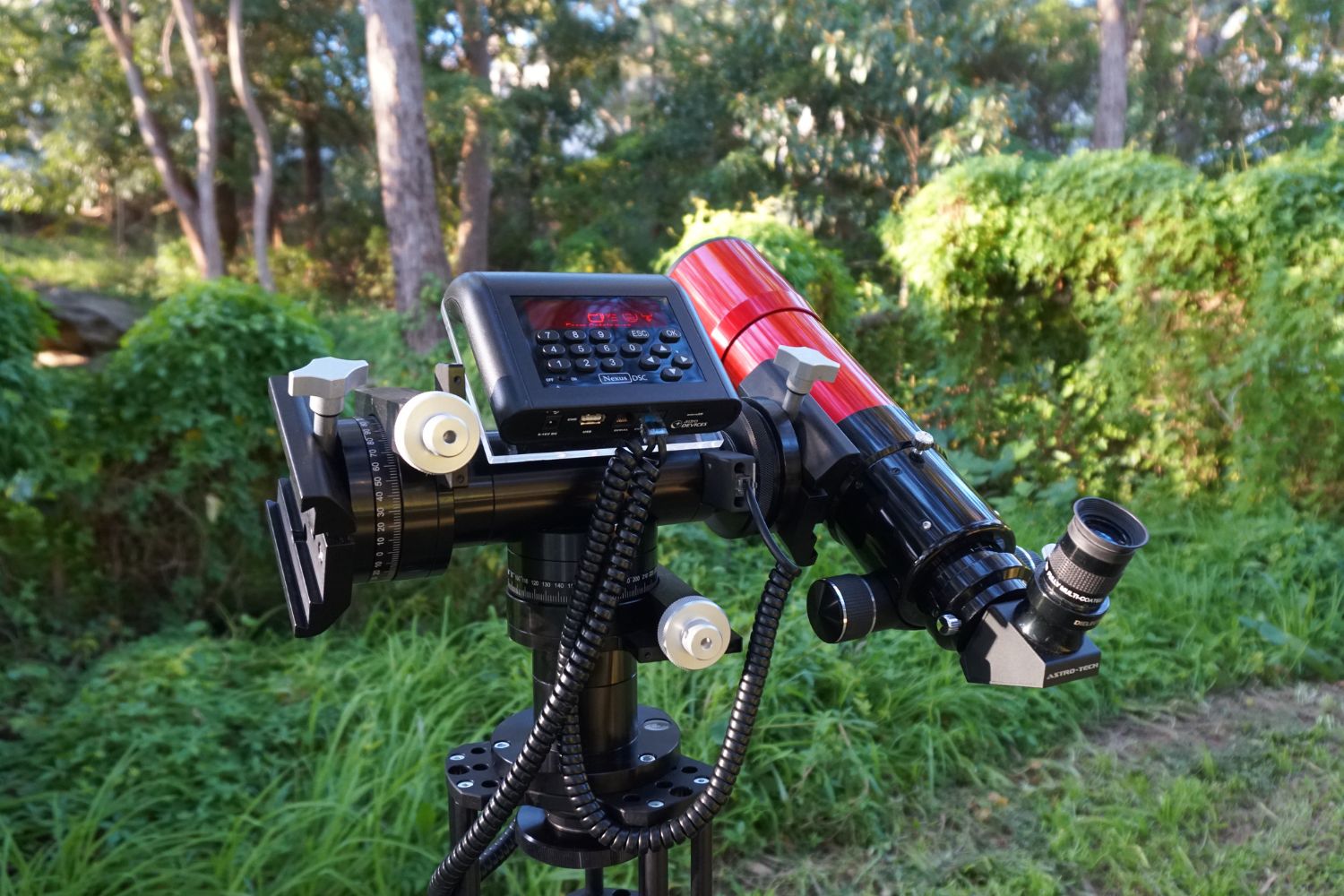
The advantages and disadvantages of DSCs:
DSC pros:
- Accessible display and keypad – today’s DSC units have large, clear red graphic displays with tactile numeric keypads that are vision- and mobility-friendly
- Doesn’t need mobile connections – most DSCs are self-contained units, so they don’t need mobile devices and are better for retaining your night vision
- Has real-time tracking – you’ll always know where your scope is pointing, reducing the chance of overshooting or missing your target
- Can withstand extreme temperatures – without the need for a mobile device, you’re able to use DSCs the whole night without risking your device shutting down if it becomes too cold or wet
- Advanced mode options & larger catalogues – for observes that enjoy Touring & want to explore a larger celestial catalogue, DSCs are the better choice
- Compatible with motorised telescopes – most DSCs are compatible with systems like ServoCAT, SiTech, and Sky Tracker
DSC cons:
- Needs to be aligned – doing a 1/2/3 star alignment can seem intimidating for beginners, so this can be a disadvantage to certain observers
- Requires encoders – this can present as a higher cost of entry as well as extra work, so isn’t as beginner friendly as a plate solving device
- Less precision on poorly fabricated telescope mounts – because DSCs rely on encoders to work, some mounts present a challenge when it comes to their fabrication or the encoders they use (<20,000k steps)
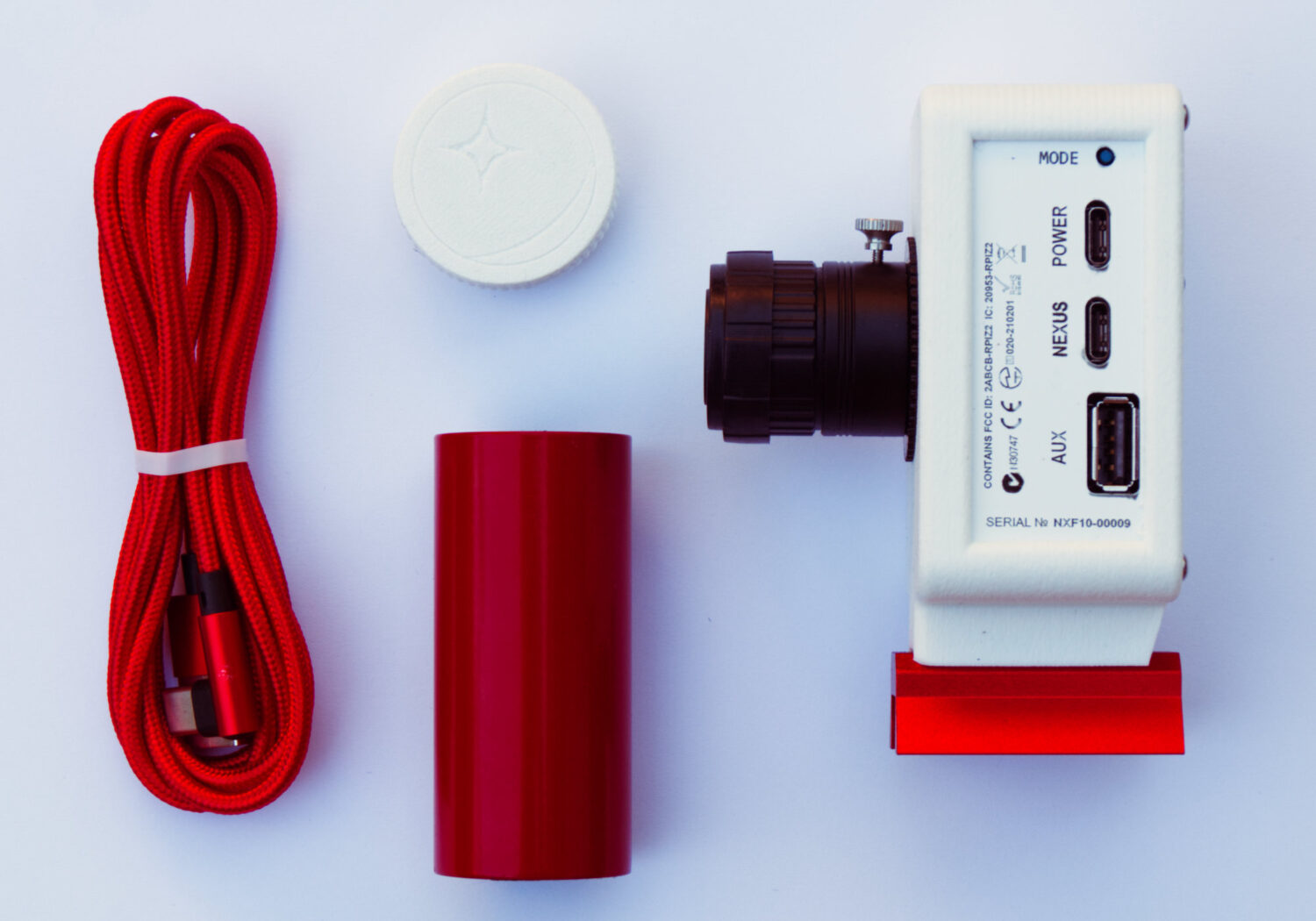
Meeting in the middle: the Nexus eFinder used with the Nexus DSC Pro
Now this is where it gets tricky. Serge created the Nexus eFinder both as a standalone plate solver but also as an augment to the Nexus DSC Pro. This makes it a bit harder to compare against more traditional plate solvers, so we’ve broken down some of the pros & cons with using the eFinder alongside the DSC Pro:
Nexus eFinder pros
- Simplifies the 1/2/3 star alignment – when you connect your eFinder to your DSC Pro, you no longer need to use a star alignment and can simply get the eFinder to do it for you. Even better is that this alignment can be reused across multiple viewing sessions, reducing your set-up time
- Has real-time tracking – unlike standalone plate solvers, the Nexus eFinder paired with the DSC Pro does allow you to have real-time tracking & accuracy as you move your telescope around
- Interfaces with motorised systems – unlike with other plate solvers, you’re able to interface with multiple motorised systems thanks to the DSC Pro’s compatibility
Nexus eFinder cons
- Higher cost of entry – admittedly, purchasing a Nexus DSC Pro, encoders & encoder kit, plus the eFinder has a pretty high upfront cost
Features to look out for when you buy plate solvers & DSCs
So far we’ve been pretty generalised because there are multiple plate solvers & DSC units on the market. We’ve tried our best to cover the points of the most popular devices, but what you buy really will depend on your budget.
But as you browse online, we recommend keeping your eye out for certain features:
Features to look for when buying plate solvers:
- Display – any display is usually better than none, especially as this will allow you to use them as standalone units
- Mounting options – see what options you have on where to place the device, such as replacing your viewfinder or a custom clamp
Features to look for when buying DSCs:
- Standalone units – whilst you can buy DSCs without displays (that need to connect to a device), standalone units will give you the best and most comprehensive experience
- WiFi integration – this allows you to use planetarium software with the DSC, giving you another way to use it
- High encoder resolution readings – the higher the encoder resolution (100,000+), the more accurate the DSC will be. Some DSCs are limited in the maximum resolutions they can read
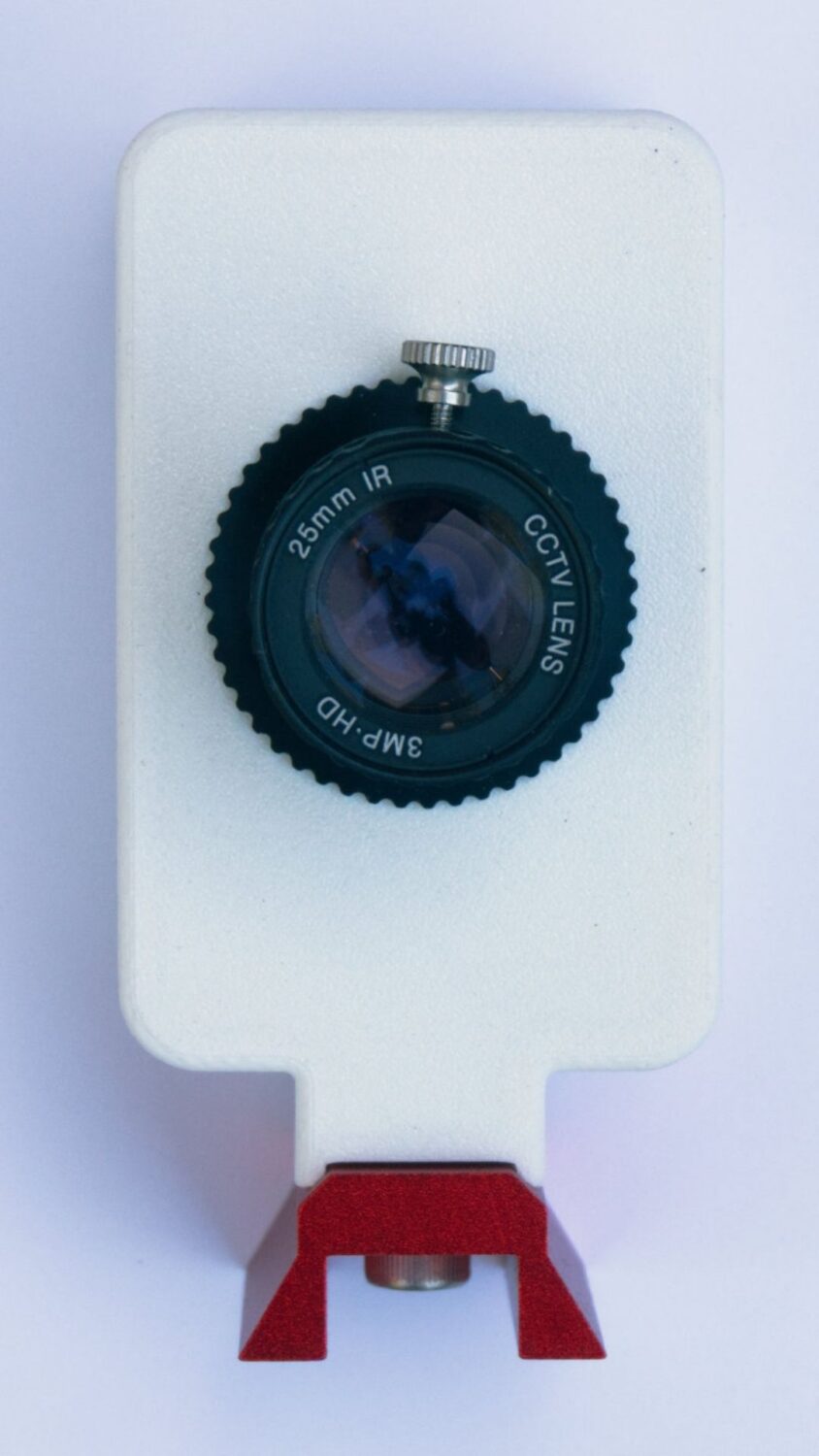
Plate solvers and DSCs each shine in their own ways
Plate solving and DSCs each have their own uses, and which one is better for you is highly dependent on your experience level, telescope model, and how much time you want to spend observing.
So whether you choose to buy a plate solver or a DSC, each will serve their own purpose and there’s no real disadvantage to either one. And the best part is that no matter what you buy, you’ll end up having a great night (or day!) out with the stars.
I’ve had a DSC Pro on my Losmandy AZ8 mount with an APO 120 refractor for a couple years and at times found my alignment to be less than perfect having to switch to a lower power eyepiece to hunt around for the target. I attribute this to user error during the alignment process. While at NEAF this year I stopped by the Astro Devices booth and met Serge and was introduced to Keith and he was telling me about how the eFinder works in conjunction with the DSC to assist in finding targets. When I finally had a clear night to try the combo out……WOW! After an easy initial calibration on Polaris and subsequent plate solve in any area of the sky, finding targets was a breeze. Each time they were perfectly centered in the eyepiece. I cant say enough about this combo as it has made my viewing sessions much more enjoyable with less time hunting and more time observing. And isn’t that what it’s all about?
So I could use this as described above with my astrodevices dsc’s and nexus-2 with SkySafari? I don’t have the dsc-pro unit. I’d love to know 🙂
-Jim in Ojai, CA
summitobservatory.org
Hi Jim, we’ve replied on Facebook as well but want to share the answer on here in case anyone else has the same question:
The Nexus eFinder has a full integration with the Nexus DSC Pro only, and not the Nexus-II (so you can’t use it with anything but the Nexus DSC Pro unfortunately).
The advantages of using the Nexus eFinder with Nexus DSC Pro are:
– simplified star alignment (you do not need to look through the eyepiece)
– very precise pointing (by performing a local sync using plate solving) – even on telescopes with mechanical imperfections
Nexus eFinder also has a ‘Live’ mode that allows it to be used on telescopes without encoders.
This sounds AMAZING. Of all thr spam I get, I wish Serge sent me this LOL.
I have the DSC pro. I use it on several scopes and it’s great. My issue, like most of us, is even though I yse a reticle EP, the dobsonian mount is very sloppy and I rarely get a perfect “shot”. Indeed, I have to back out to the 20mm or often the 31mm to locate objects. I’m psyched to try this device.